
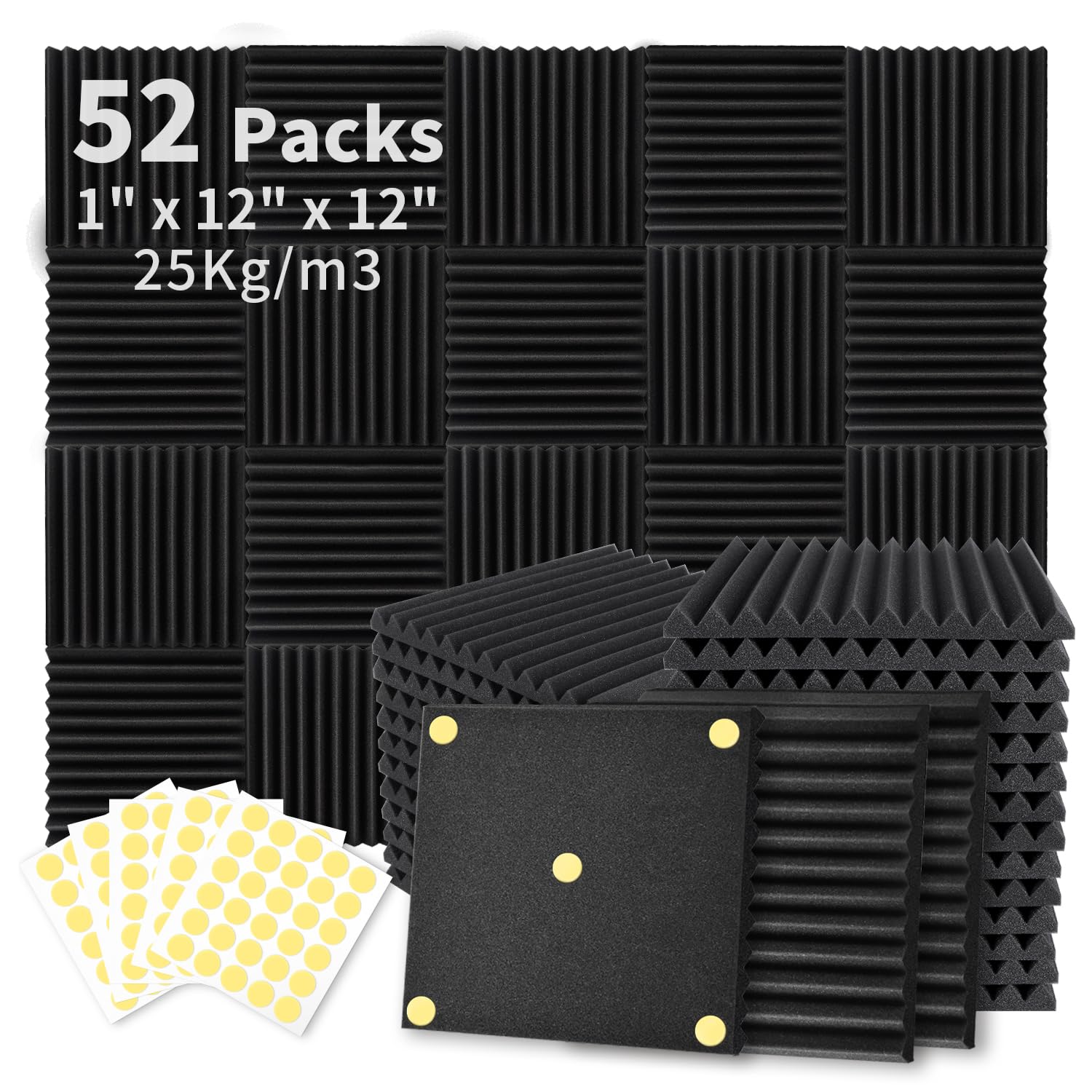
The Focusound 52 Pack Acoustic Foam Panels offer a straightforward entry point for basic sound treatment. These are 1-inch thick, 12×12 inch wedge-shaped foam tiles, designed to reduce echo and flutter echoes in smaller rooms. They come with 300 double-sided adhesive pads for mounting, which is a helpful inclusion for those who don’t want to buy glue or tape separately.
In practical use, these panels perform best when placed at first reflection points on walls, such as behind monitors or on side walls in a home recording studio or voice-over booth. They are effective at dampening mid and high-frequency reflections, which can clean up a mix or make speech recordings sound less boxy. However, they do very little for low-frequency bass trapping, as 1-inch foam is simply too thin to absorb longer sound waves. For a home office used for video calls or podcasting, they can noticeably reduce room reverb when placed near the microphone area.
The wedge shape is standard and provides a decent surface area for sound diffusion and absorption. The foam density feels moderate—not as dense as higher-end acoustic panels, but acceptable for the price point. The adhesive pads are convenient, but their long-term hold can be questionable, especially on textured walls or in humid environments. Some users may need to supplement with stronger adhesive or spray adhesive for a more permanent installation.
- Thickness: 1 inch is suitable for reducing mid/high frequencies, but not for bass management.
- Size: 12×12 inches are easy to arrange in patterns, but coverage requires many panels for larger rooms.
- Included adhesive: 300 double-sided pads save time, but may not adhere well to all surfaces long-term.
- Material: Standard acoustic foam, not Class A fire rated, so check local safety codes.
A key limitation is the lack of bass absorption. If you’re mixing music with heavy low-end, these panels won’t solve booming bass issues. For that, you’d need thicker foam (2-4 inches) or dedicated bass traps. Compared to mineral wool or fiberglass panels, these foam tiles are less effective overall, but they are lighter, easier to cut, and much cheaper. They are a reasonable alternative to DIY solutions for someone who wants a quick, no-fuss setup without tools.
These panels are suitable for home studios, podcasters, content creators, and anyone needing to tame echo in a small to medium-sized room. They are not suitable for professional recording studios requiring precise acoustic treatment, for large rooms with significant low-frequency issues, or for spaces where fire safety is a top priority without additional certifications. The value proposition is solid for the budget-conscious, but expectations should be realistic about what 1-inch foam can achieve.