
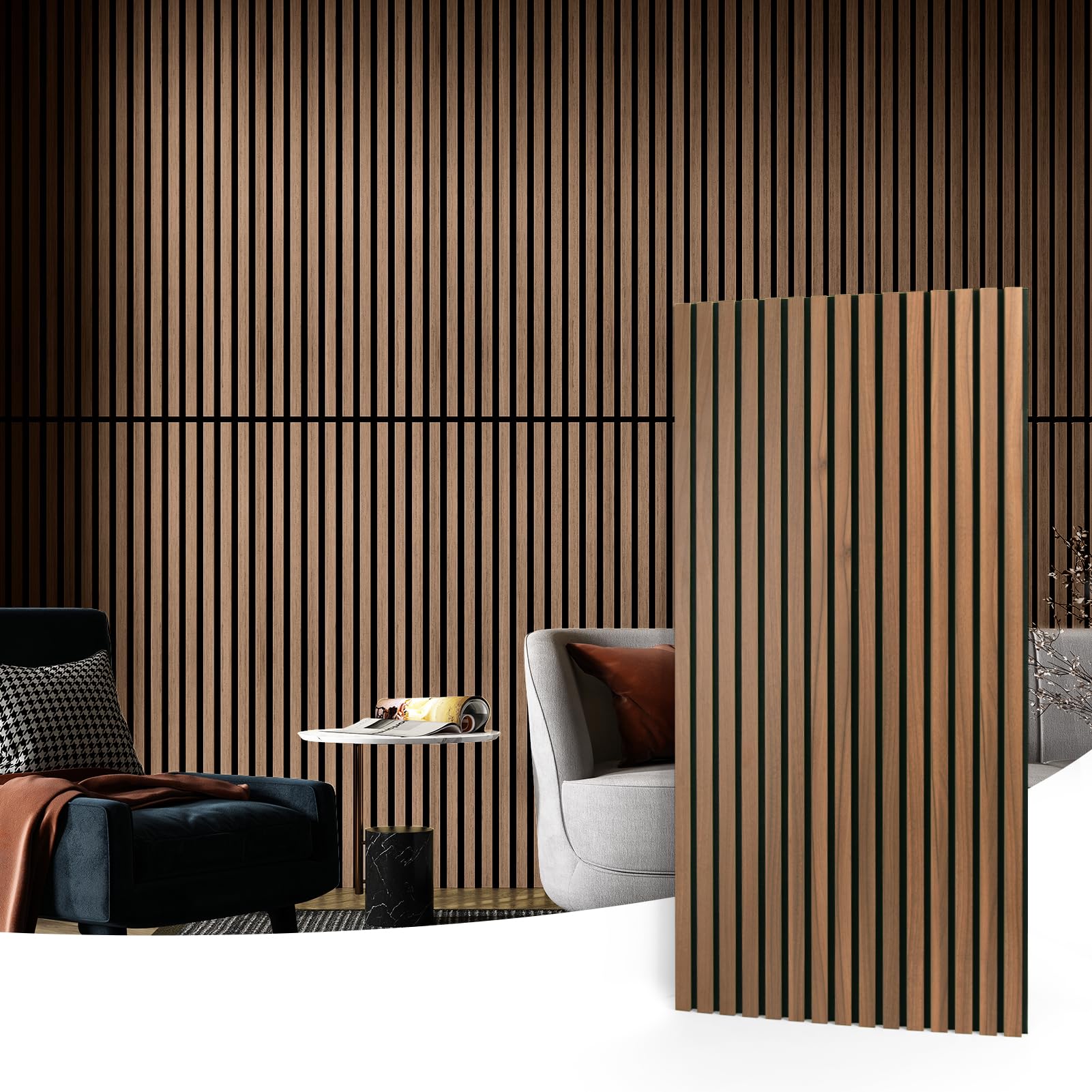
The Art3d 2 Wood Slat Acoustic Panels in walnut are a specific solution for those looking to address both sound reflection and visual texture in a room. These are 3D fluted panels, meaning they have a series of vertical grooves that create a noticeable relief pattern. The walnut finish is a medium-dark wood tone, not overly glossy, and it mimics a natural wood grain reasonably well for a composite product.
In a real-world setting, these panels are typically mounted on walls or ceilings. I’ve seen them used in home offices to reduce echo during video calls, in living rooms behind a TV or sofa to break up flat surfaces, and in small recording studios or podcast setups where controlling reverb is critical. They are not meant to completely soundproof a room—that’s a different category of product—but they do absorb mid-to-high frequency sounds, which helps make a space feel less ‘boomy’ or hollow. The 3D fluting pattern also adds a design element that can make a plain wall more interesting without being overly busy.
Key functional features are straightforward. Each panel is roughly 2 feet by 2 feet, with a thickness that provides the fluted depth. They are made from a dense, felt-like material that is compressed and then finished with the wood veneer. Installation requires adhesive or mounting strips, which are not included. The panels are relatively lightweight, so standard construction adhesive or heavy-duty double-sided tape often works, but for ceilings, mechanical fasteners or a more robust adhesive system is recommended. The edges are squared, so they butt up against each other with a small seam, which is visible but not distracting if aligned carefully.
One limitation worth noting is the color consistency. The walnut finish can vary slightly between batches, and the wood grain pattern is printed or applied, not a natural veneer. Up close, some panels may have a slightly different sheen or pattern repeat, which can be noticeable if you are looking for a perfectly uniform look. Also, because the panels are somewhat rigid, cutting them to fit around electrical outlets or corners requires a fine-tooth saw or a sharp utility knife, and the cut edges may not look as clean as the factory-finished ones. They also attract dust in the grooves, so regular dusting with a soft brush or vacuum attachment is needed to keep them looking good.
Compared to standard 2×2 acoustic ceiling tiles or fabric-wrapped panels, these Art3d panels offer a more decorative finish. Fabric panels tend to be more absorbent across a wider frequency range and are often easier to cut, but they look utilitarian. The fluted wood-style panels trade some acoustic performance for visual appeal. They are less effective at absorbing low-frequency sounds (like bass from a subwoofer) than thick, porous acoustic foam or bass traps. For general speech clarity and reducing slap echo, they perform adequately, but they are not a replacement for dedicated acoustic treatment in a professional studio.
Who is this suitable for? It is a good fit for homeowners or renters who want a balance of light acoustic control and a modern, warm aesthetic. It works well in living areas, home offices, or media rooms where the panels will be visible and part of the decor. It is less suitable for professional recording environments where precise frequency absorption is required, or for large commercial spaces where uniform, high-absorption performance is the priority. Also, if you need a seamless, invisible acoustic treatment, fabric-wrapped panels or custom solutions might be a better choice. The Art3d panels are a reasonable middle ground, offering a noticeable improvement in sound clarity and a distinct look, but with some compromises in acoustic range and installation ease.