
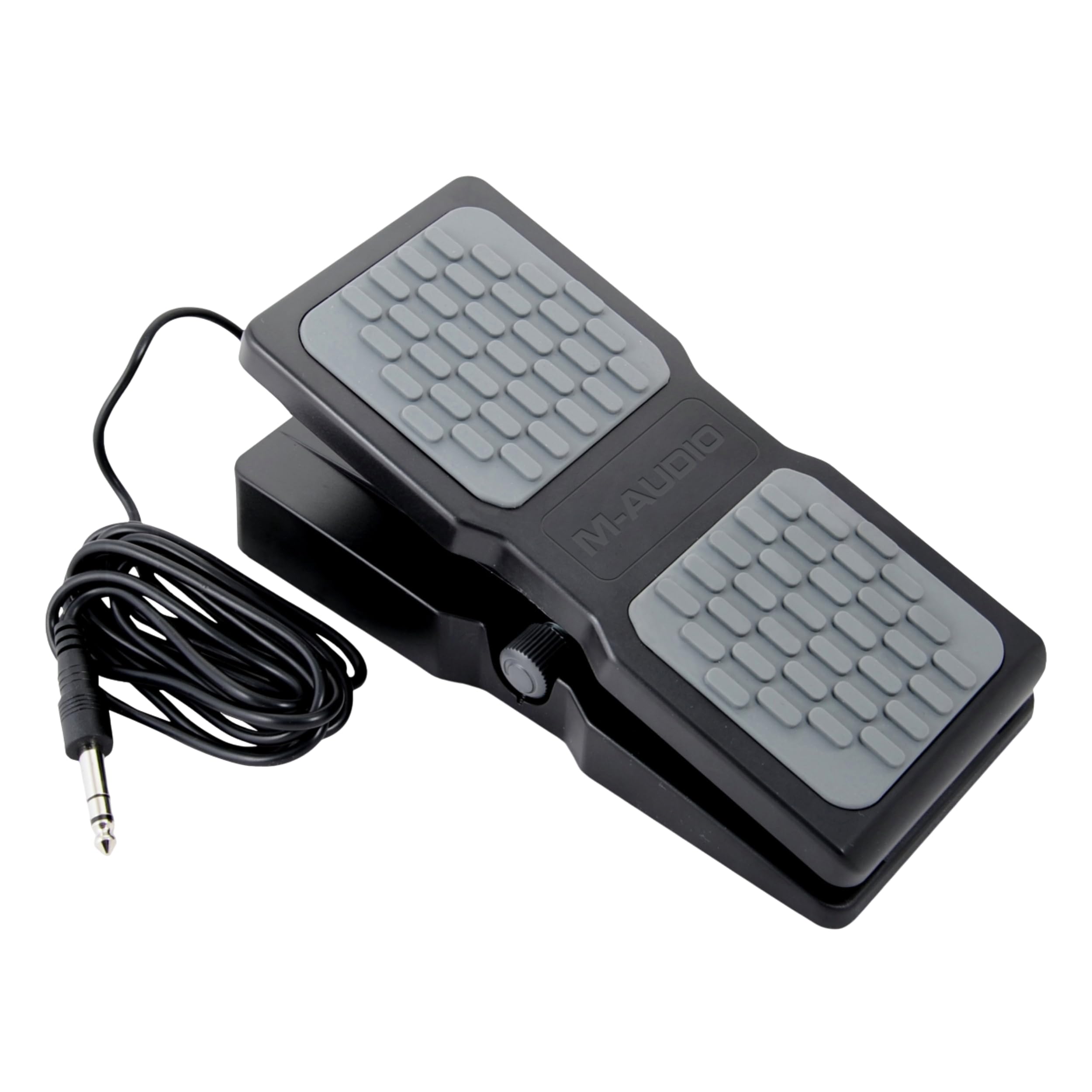
The M-Audio EX-P Expression Pedal is a straightforward accessory aimed at keyboardists, MIDI controller users, and guitarists who need a simple way to add real-time control over parameters like volume, modulation, or effects. It’s a plastic-bodied pedal with a standard ¼-inch TRS connection, designed to work with a range of gear from synthesizers to supported guitar effects pedals. After spending some time with it, I can say it does what it’s supposed to do, but with some clear trade-offs that potential buyers should consider.
In real-world use, this pedal is often employed to control expression inputs on keyboards or MIDI controllers, such as adjusting filter cutoff, wah effects, or volume swells. It’s also compatible with certain guitar multi-effects units that accept an expression pedal. The EX-P feels lightweight, which is fine for studio or home use, but it might not inspire confidence on a crowded stage where a heavier stomp could shift it. The pedal’s travel is smooth enough, though the resistance is lighter than some might prefer—it doesn’t offer the weighted feel of more expensive options like the Moog EP-3 or the Roland EV-5. That said, for casual playing or basic control, it’s serviceable.
Key features include a passive design (no battery or power needed), a polarity switch on the bottom to match different gear, and a rubber base to prevent slipping. The polarity switch is a practical addition, as it helps with compatibility across various devices—some keyboards expect a different tip/ring configuration. However, the build quality is a clear limitation. The plastic casing feels a bit flimsy, and the hinge mechanism uses a simple spring that could wear out over time with heavy use. I’ve seen reports of the pedal’s treadle becoming loose after extended use, which aligns with the budget price point. This isn’t a pedal you’d want for daily gigging; it’s better suited for occasional use or as a backup.
When compared to a generic volume pedal (like a passive guitar volume pedal used for expression), the EX-P has the advantage of being purpose-built for expression control, with a standard TRS connection that many keyboards expect. Volume pedals often use a different wiring scheme (TS) and may not work correctly without modification. However, more robust expression pedals from brands like Boss or Yamaha offer metal construction and smoother potentiometers, though they cost two to three times more. The EX-P sits at the low end of the market, and you get what you pay for: adequate functionality with compromises in durability and feel.
Who is this for? It’s suitable for keyboardists or MIDI controller users who need a basic expression pedal for home studio work, light practice, or as a spare. It also works for guitarists with effects units that accept expression pedals, provided they don’t need heavy-duty reliability. Who should avoid it? Gigging musicians who rely on an expression pedal for every performance should look at sturdier alternatives. Similarly, anyone sensitive to pedal resistance or who wants a more natural, weighted sweep might be frustrated by the EX-P’s light action. It’s also not ideal for applications requiring precise, repeatable control—like detailed automation in a DAW—where a higher-quality pot and build would make a difference.
In summary, the M-Audio EX-P is a functional entry-level expression pedal that works as advertised for basic tasks. Its limitations in build quality and feel are typical for its price range, but they’re worth noting if you plan to use it frequently. It’s a reasonable choice for budget-conscious users who don’t need premium performance, but it’s not a long-term investment for heavy use. If you’re on the fence, consider how often and where you’ll use it—that will determine if this pedal meets your needs or if spending more is justified.