
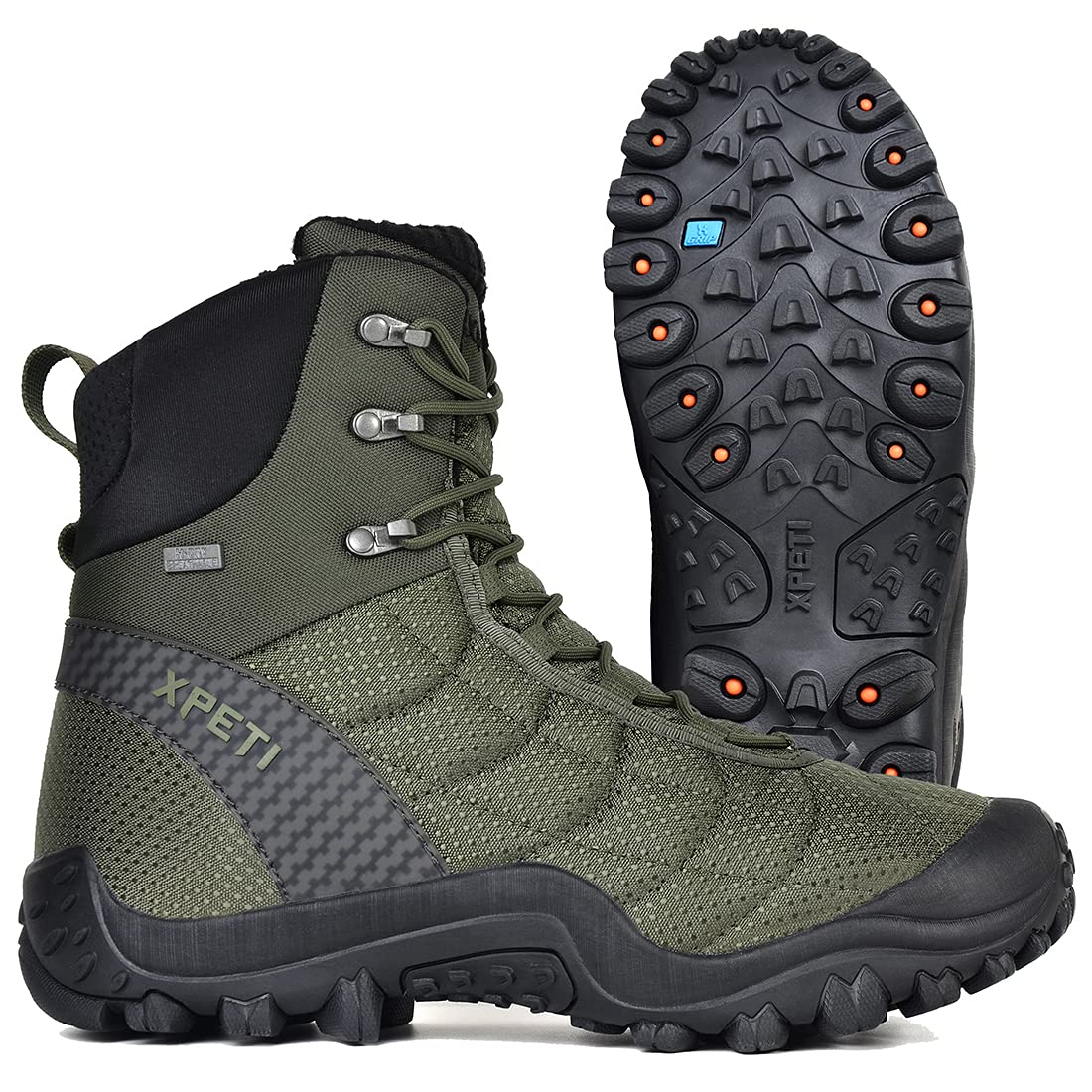
The XPETI Men’s Crest Thermo Winter Hiking Boots in Olive Green (size 14 tested) aim to bridge the gap between lightweight trail shoes and full-on winter boots. After several weeks of use on snow-packed trails, icy paths, and slushy parking lots, the overall impression is that these boots perform well in cold conditions but come with a few trade-offs that potential buyers should consider.
The most notable feature is the combination of a waterproof membrane and 200g of Thinsulate insulation. This setup handles temperatures down to about -10°F/-23°C without making the boot feel overly bulky. On a 15°F day with light snow, feet stayed warm and dry after two hours of walking. The insulation is sufficient for active use in moderate cold, but for prolonged standing in sub-zero conditions, you may want a thicker boot.
The outsole uses a rubber compound with moderately aggressive lugs. Traction on packed snow and light ice is decent, but on glare ice, the grip is merely average—no better than many standard winter boots. The tread pattern sheds mud and snow reasonably well, though sticky snow can accumulate in the deeper grooves after extended use.
Where these boots stand out is in their weight and flexibility. At roughly 2.2 pounds per boot (size 14), they feel closer to a sturdy hiking shoe than a traditional insulated snow boot. This makes them suitable for day hikes or walks where you might alternate between snow and dry ground. The mid-cut height provides enough ankle support for uneven terrain without restricting movement, which is helpful for scrambling over rocks or logs.
However, there are limitations. The sizing runs slightly narrow, especially in the toe box. For those with wide feet, the size 14 may feel snug even with thin socks. This could be a problem for long days on the trail or for people who prefer thicker socks in winter. Additionally, the lacing system uses standard round laces that can loosen during activity; double-knotting is recommended.
Comparing these to a category like insulated leather work boots or heavy-duty snow boots, the XPETI Crest Thermo is clearly designed for lighter use. They lack the rigid support and extreme insulation of a boot like the Baffin Impact or Sorel Caribou, but they are far more comfortable for walking distances and pack down smaller for travel. For someone who needs a boot for daily commutes, light snowshoeing, or winter hiking on well-maintained trails, these are a reasonable choice. They are not ideal for mountaineering, deep powder, or extended exposure to wet slush, where a taller, more waterproof boot would be better.
Durability is a mixed bag. The synthetic upper and rubber toe cap resist scuffs and minor abrasions, but after a few weeks, some stitching around the tongue showed slight fraying. This isn’t a deal-breaker, but it suggests these boots may not survive multiple seasons of heavy use. The insole is removable and offers moderate arch support—adequate for most, but those with high arches may want to replace it with an orthotic.
Overall, the XPETI Men’s Crest Thermo Winter Hiking Boots are a solid option for casual winter hiking and everyday cold-weather wear. They are light, reasonably warm, and waterproof enough for light snow. But if you have wide feet, need extreme insulation, or plan to tackle technical winter terrain, you’ll likely want a more specialized boot. They suit the occasional winter hiker or commuter better than the hardcore outdoor enthusiast.