
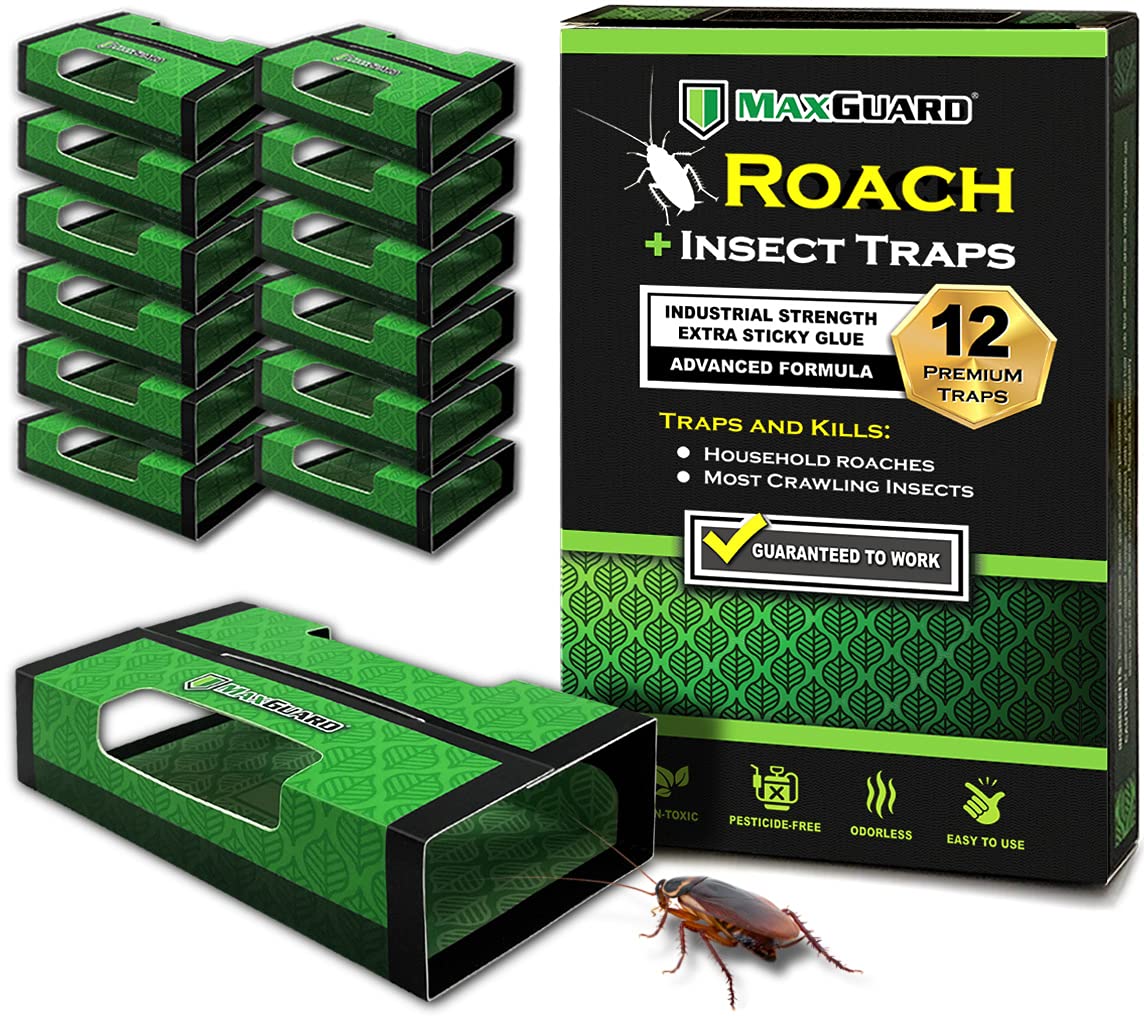
Sticky traps are one of those pest control tools that people either swear by or dismiss as too passive. The MaxGuard Roach + Spider Traps fall somewhere in the middle—they work well for certain situations but aren’t a cure-all for serious infestations. These are non-toxic, extra-sticky box traps designed to catch German cockroaches, American roaches, Oriental roaches, spiders, and other crawling bugs. After testing a box of 12 around a typical suburban home, here is what stood out.
The traps are simple to use: you fold the cardboard box along pre-scored lines to create a small tunnel, peel off the backing to expose the adhesive, and place them where you’ve seen activity. The sticky surface is quite aggressive—it caught a few small spiders and a couple of silverfish within the first few days. The design keeps the glue protected from dust and accidental contact, which is a practical touch compared to flat glue boards that can get dirty or stuck to furniture.
One key functional feature is the non-toxic nature of the adhesive. There are no pesticides or fumes, so you can place these in kitchens, pantries, or near children’s play areas without worrying about chemical exposure. The traps use a scent attractant, but it’s mild and not noticeable from a few feet away. They are also relatively discreet—the brown cardboard blends in along baseboards or under appliances.
However, there are limitations. The traps are not very effective for large cockroaches if you have a heavy infestation. A few American roaches were caught, but mostly smaller ones. The adhesive, while strong, can lose stickiness if the trap gets damp or collects too much dust over time. In a humid basement, the boxes started to warp after a week, which reduced their effectiveness. Also, the traps are single-use—once they catch a few insects, the glue is covered and less effective for new ones. You’ll need to replace them regularly, which adds up if you have multiple problem areas.
Compared to bait stations or gel baits, these traps are more of a monitoring tool than a primary control method. Bait stations with poison can reduce a roach population over time by killing them at the source, but sticky traps only catch what wanders into them. For example, a product like Combat Roach Bait Stations targets the nest by poisoning roaches that carry the bait back, while MaxGuard traps just catch the individuals that happen to cross the sticky floor. If you have a mild issue with a few spiders or occasional roaches, these traps can help you track activity and catch them. But if you’re dealing with a full-blown infestation, you’ll need something more aggressive, like gel bait or professional treatment.
Who is this product for? It’s suitable for people who want a non-toxic, low-effort way to monitor for pests in specific areas—like under the sink, behind the refrigerator, or in a garage. It’s also good for catching the occasional spider without using sprays. It is not suitable for heavy infestations, damp environments where the cardboard will degrade quickly, or for people who want a long-term solution without frequent trap replacement. The 12-pack is a decent value if you place them strategically, but don’t expect miracles.
Overall, the MaxGuard Roach + Spider Traps are a functional but limited tool. They do what they advertise—catch crawling insects in a non-toxic way—but they are best used as part of a broader pest management plan rather than a standalone fix. If you have a few bugs and want to keep tabs on them, these are fine. For anything more serious, look elsewhere.