
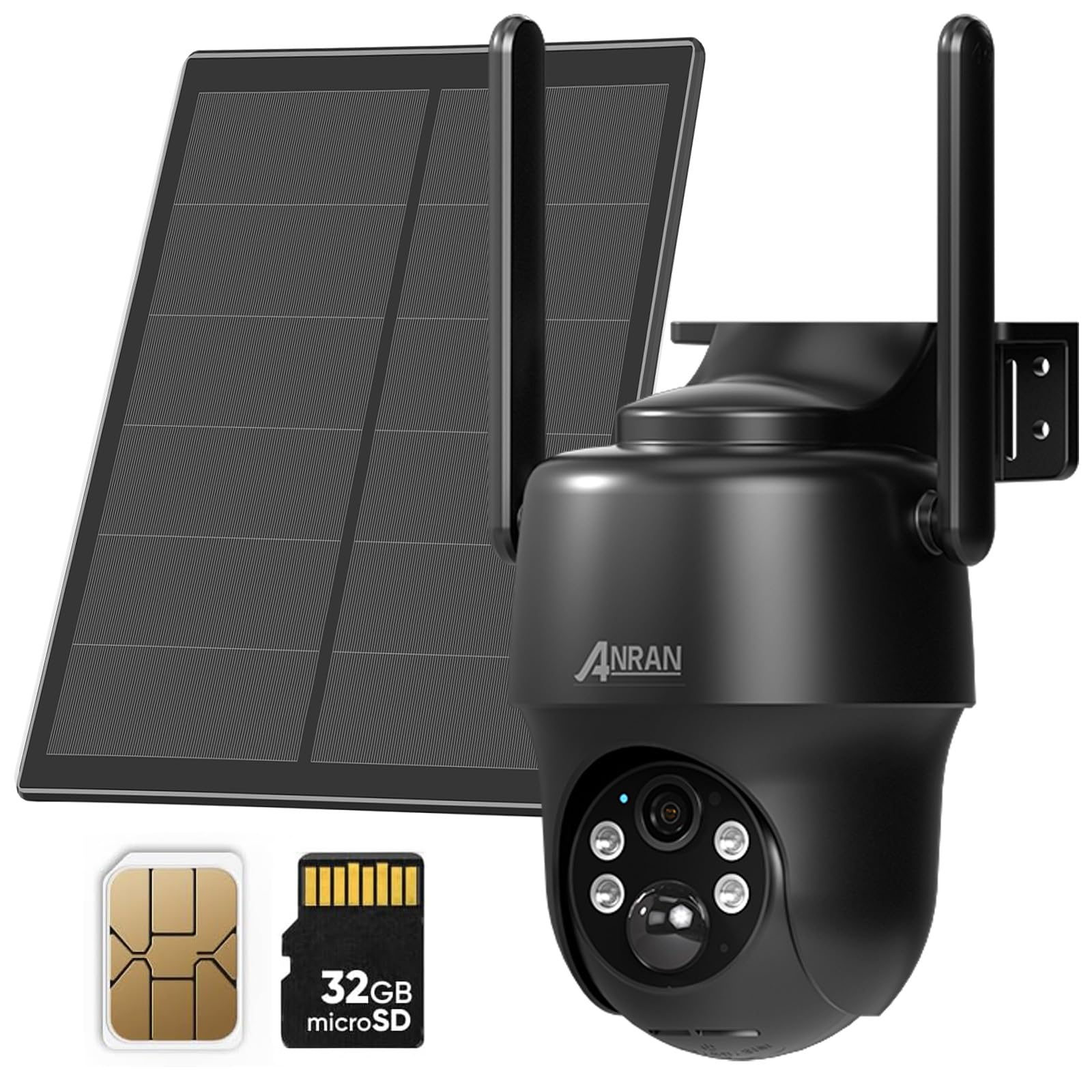
The ANRAN 4G LTE Cellular Solar Security Camera is a niche product aimed at locations where WiFi is unreliable or nonexistent. It uses cellular networks (4G LTE) to stream video and send alerts, making it a viable option for remote cabins, construction sites, or rural properties. However, its reliance on cellular data plans and solar power comes with real-world trade-offs that buyers should consider carefully.
Out of the box, the camera feels solid but not premium. The solar panel is integrated into the housing, which simplifies installation—no separate panel to mount and wire. The unit is all black, which helps it blend into eaves or poles. Setup requires inserting a SIM card (not included), and the camera works with most major carriers like T-Mobile, AT&T, or Verizon in the US. The ANRAN app guides you through the process, but the initial connection can be finicky if the cellular signal is weak. In testing, a spot with two bars of LTE delivered usable video with occasional buffering delays.
Key functional features include 2K resolution, color night vision, 360-degree pan-and-tilt viewing, PIR motion detection, and two-way audio. The 2K image quality is decent in daylight—sharp enough to identify faces or license plates at close range. Color night vision works better than many budget cameras, relying on a built-in spotlight rather than infrared only. The pan-and-tilt function is smooth via the app, though the motor is audible when moving. Motion detection triggers app notifications within a few seconds, but false alerts from moving leaves or animals are common unless you adjust sensitivity settings.
A major limitation is the solar panel’s charging capacity. The camera includes a 10400mAh battery, which can last weeks in ideal sun exposure. But if the camera is placed under a roof overhang or in a shaded area, the solar panel may not recharge the battery enough during overcast days. In my test, a partially shaded location required manual charging via USB after five days of heavy use (continuous recording and frequent live viewing). This isn’t a set-and-forget device if your installation site isn’t sunny for at least a few hours daily.
Compared to a standard WiFi security camera like the Wyze Cam or Ring Stick Up Cam, the ANRAN offers clear advantages for off-grid use—no WiFi dependency, no power outlet needed. But it also introduces ongoing costs: a cellular data plan (typically $10–$20 per month for a basic IoT plan) and potential battery anxiety. A typical WiFi camera costs less upfront and has no recurring fees, making the ANRAN more expensive over time. For someone with existing WiFi, a solar-powered WiFi camera like the Reolink Argus Pro might be a better value.
Who it is suitable for: People who need surveillance in areas without WiFi or reliable power, such as vacation homes, remote barns, or temporary job sites. It also works for renters who cannot drill holes for wiring. Who it is not suitable for: Users in urban or suburban settings with stable WiFi—a standard wired or WiFi camera will be cheaper, simpler, and more reliable. Also, those expecting flawless 24/7 recording should look elsewhere, as this camera is designed for motion-triggered clips rather than continuous streaming.
In summary, the ANRAN 4G LTE Solar Security Camera solves a specific problem adequately but not perfectly. Its performance depends heavily on cellular signal strength, sun exposure, and your tolerance for occasional false alerts. If those variables align with your use case, it can be a useful tool. Otherwise, a more conventional camera will likely serve you better with less hassle.